How Do You Know If Your AI Marketing Is Trustworthy?
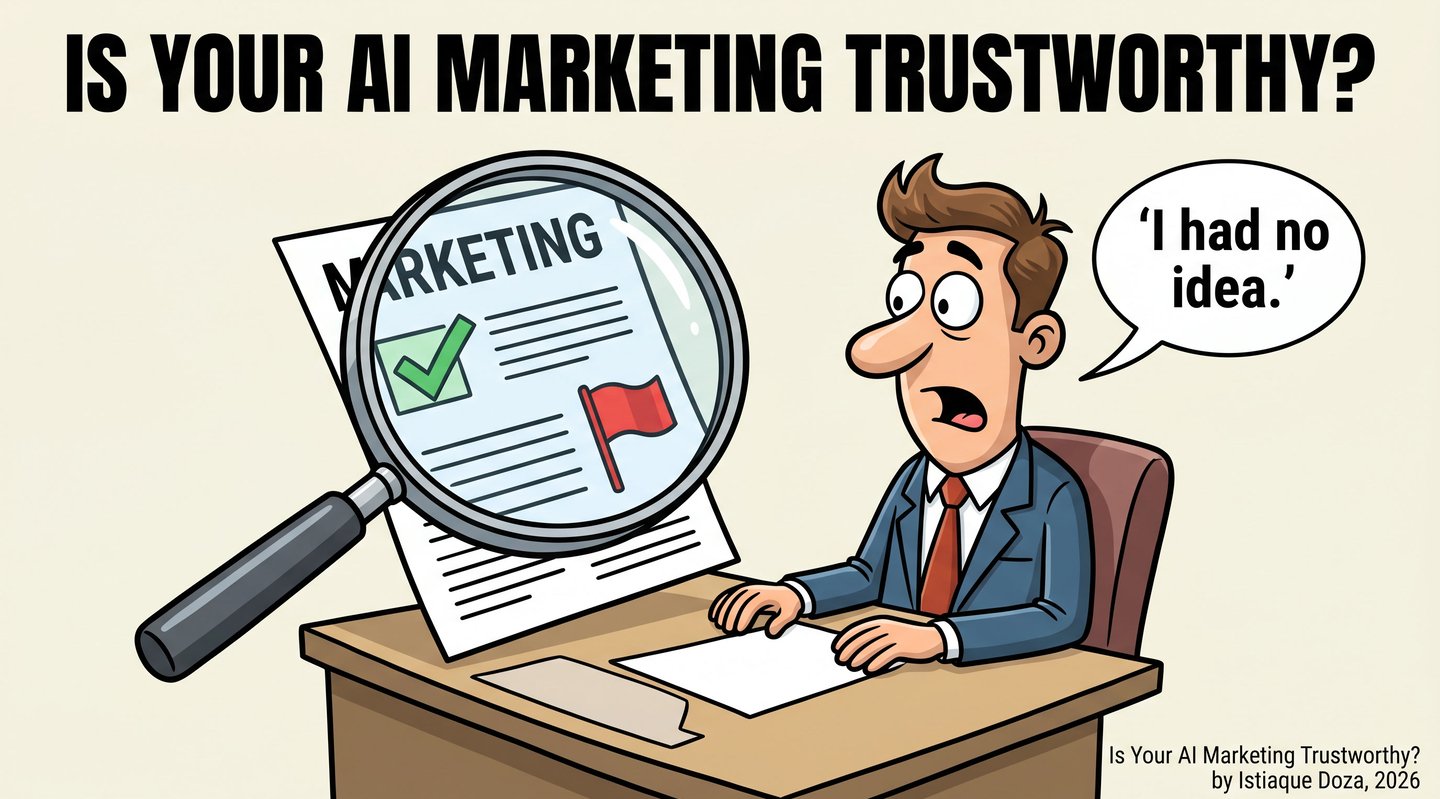
Most marketers ask if their AI content is good enough. They should be asking if their audience will trust it. Here are four questions to check your AI marketing right now.
AI MARKETING
If the checklist reveals something you cannot fix alone, the Trust Risk Snapshot is the next step. Book it at istiaquedoza.com/trust-audit.
Sources:
NIM Study - Buder et al., 2024 - https://www.nim.org/en/publications/detail/transparency-without-trust
Ethical Consumer Attitudes and Trust in Artificial Intelligence in the Digital Marketplace - MDPI, December 2025 - https://www.mdpi.com/2673-6470/6/1/1
AI Ethics in Digital Marketing - GlobeRunner, December 2025 - https://globerunner.com/ai-ethics-in-digital-marketing-transparency-trust-consumer-expectations/
AI, Trust and Impact: Marketing Trends 2026 - UserTesting, February 2026 - https://www.usertesting.com/blog/ai-driven-marketing-trends
Marketing AI Boom Faces Crisis of Consumer Trust - AI News, August 2025 - https://www.artificialintelligence-news.com/news/marketing-ai-boom-faces-crisis-of-consumer-trust/
Most marketers ask the wrong question about AI.
They ask: “Is this content good enough?”
They should be asking: “Will my audience trust it?”
Those are two very different questions. And right now, most brands are getting the answer wrong.
The Trust Penalty Is Real
A 2024 study by the Nuremberg Institute for Market Decisions surveyed 600 marketing professionals and found that all of them were using AI in their work. Every single one.
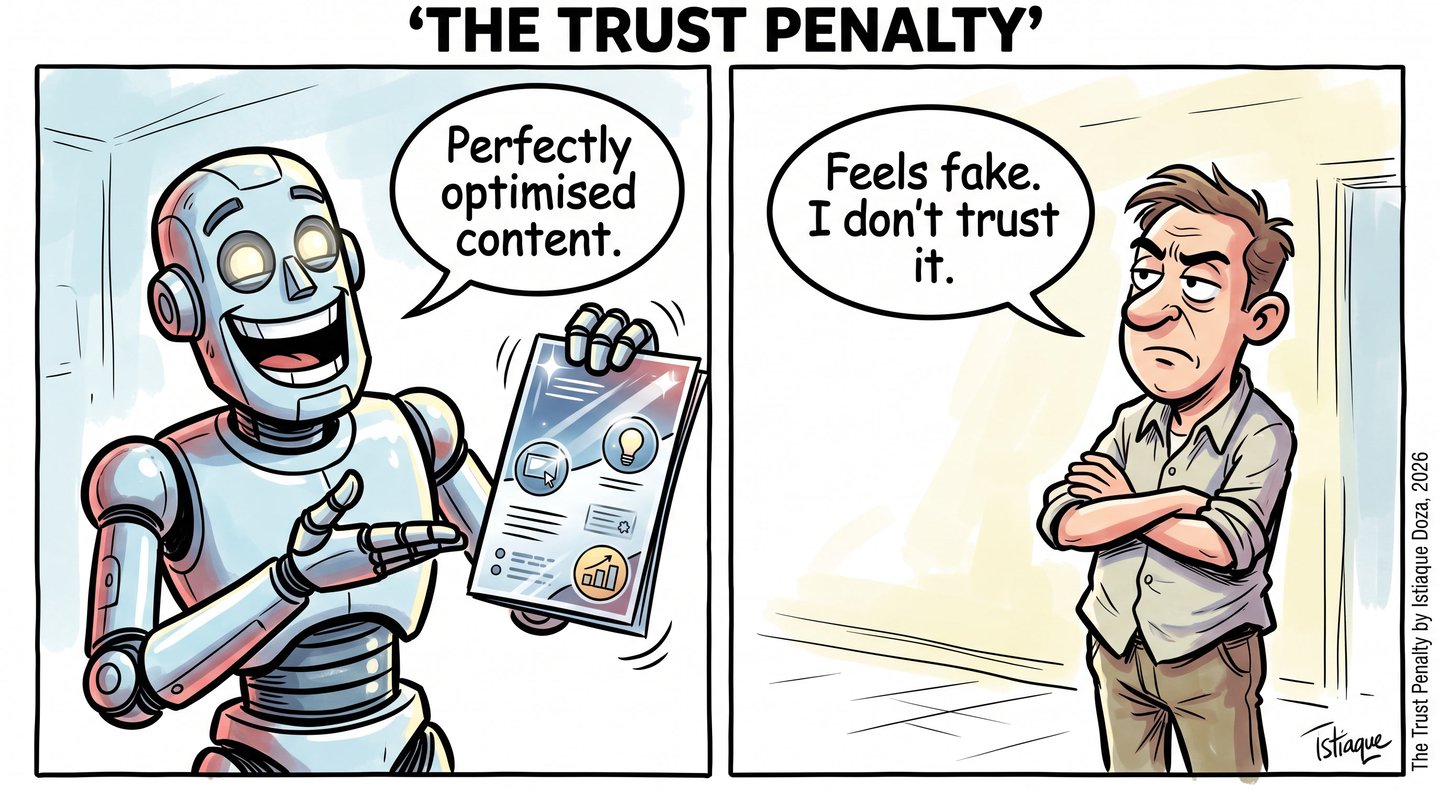
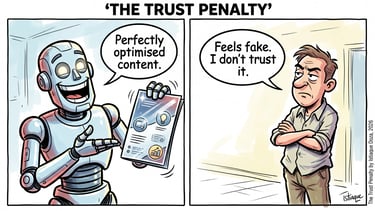
The same research found that when people know content is AI-generated, they trust and engage with it less, even if the quality is high. That is the trust penalty.
You can create polished, optimized content. If it feels machine-made, your audience will pull back.
Coca-Cola learned this the hard way. Their 2023 AI-generated holiday ad, a remake of a classic, was called “soulless” by viewers. The company praised efficiency. The audience cared about whether it felt real.
The Numbers Are Getting Worse, Not Better
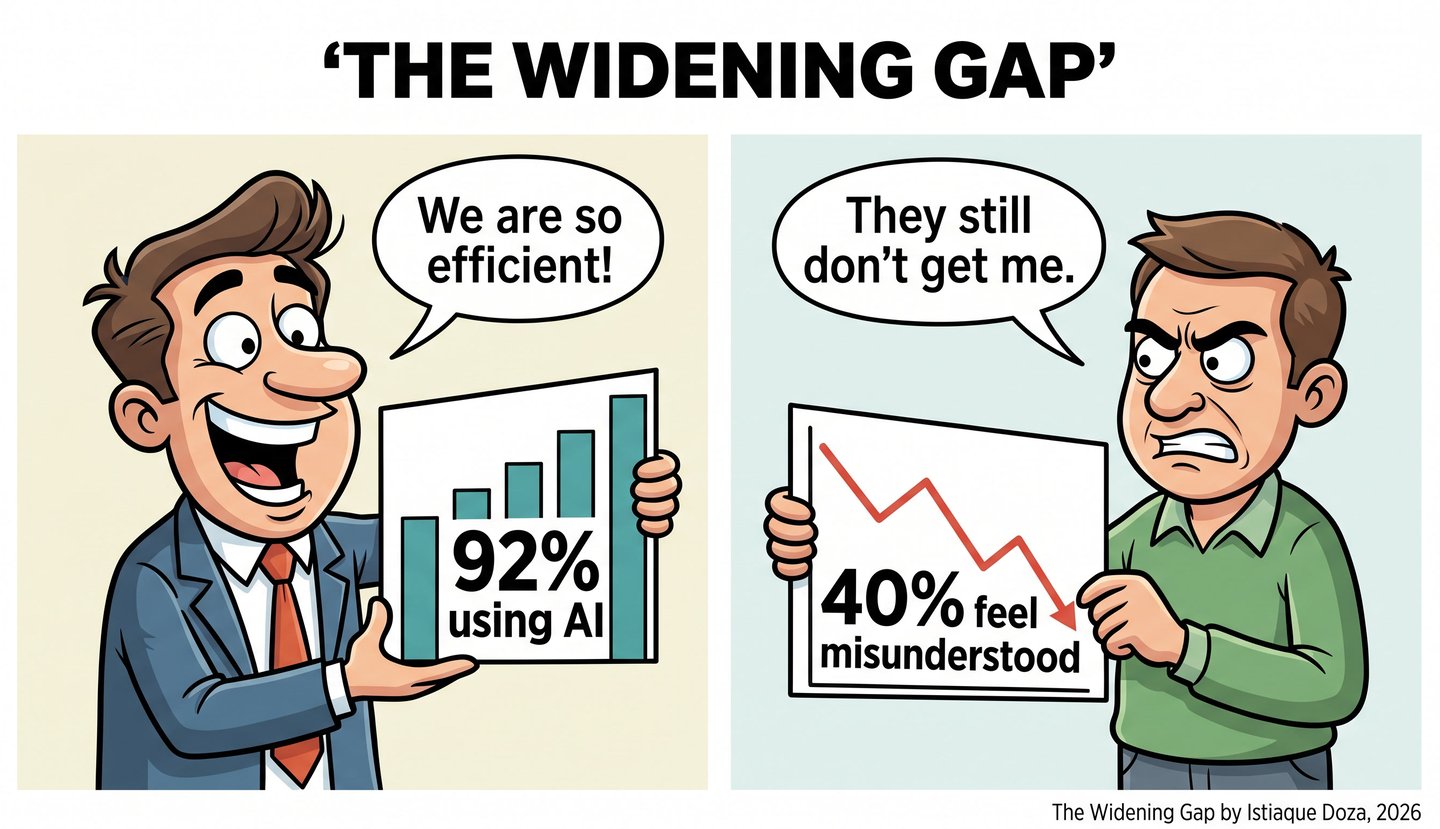
A SAP Emarsys survey found that 92% of marketing professionals now use AI daily. AI is now standard practice.
On the consumer side, 40% say brands do not get them. Last year, it was 25%.
As AI adoption rises, the sense of being understood drops.
The gap is widening. It will keep widening for brands that use AI to replace human judgment rather than support it.
What Trustworthy AI Marketing Actually Looks Like
Trustworthy AI marketing is not about disclaimers. It is not about adding a note at the bottom of a page saying the content was AI-assisted.
It is about how you use AI in your process and how much human judgment stands between AI output and your audience.
Here are four questions to check your own marketing right now.
1. Can you explain every claim your marketing makes?
AI generates confident statements without real evidence. If you cannot point to a source, case study, or client result for a claim, it is a trust risk.
2. Does your AI content sound like you - or like everyone else?
AI models use the same data. They produce similar patterns and phrases. If your content could come from any brand in your category, you are blending into noise.
3. Are you disclosing AI use where it matters?
A December 2025 study published in MDPI found that transparent and responsible AI practices strengthen brand credibility and foster ethical consumer engagement. Transparency is not a weakness. Hiding it is.
The question is not whether to disclose. The question is how to disclose so you build confidence, not doubt.
4. Is a human reviewing everything before it reaches your audience?
AI makes errors. It invents facts. It misreads context. If you skip human review before content goes live, you risk a trust crisis.
The 60/40 Rule
I use a principle called the 60/40 Rule in all my client work.
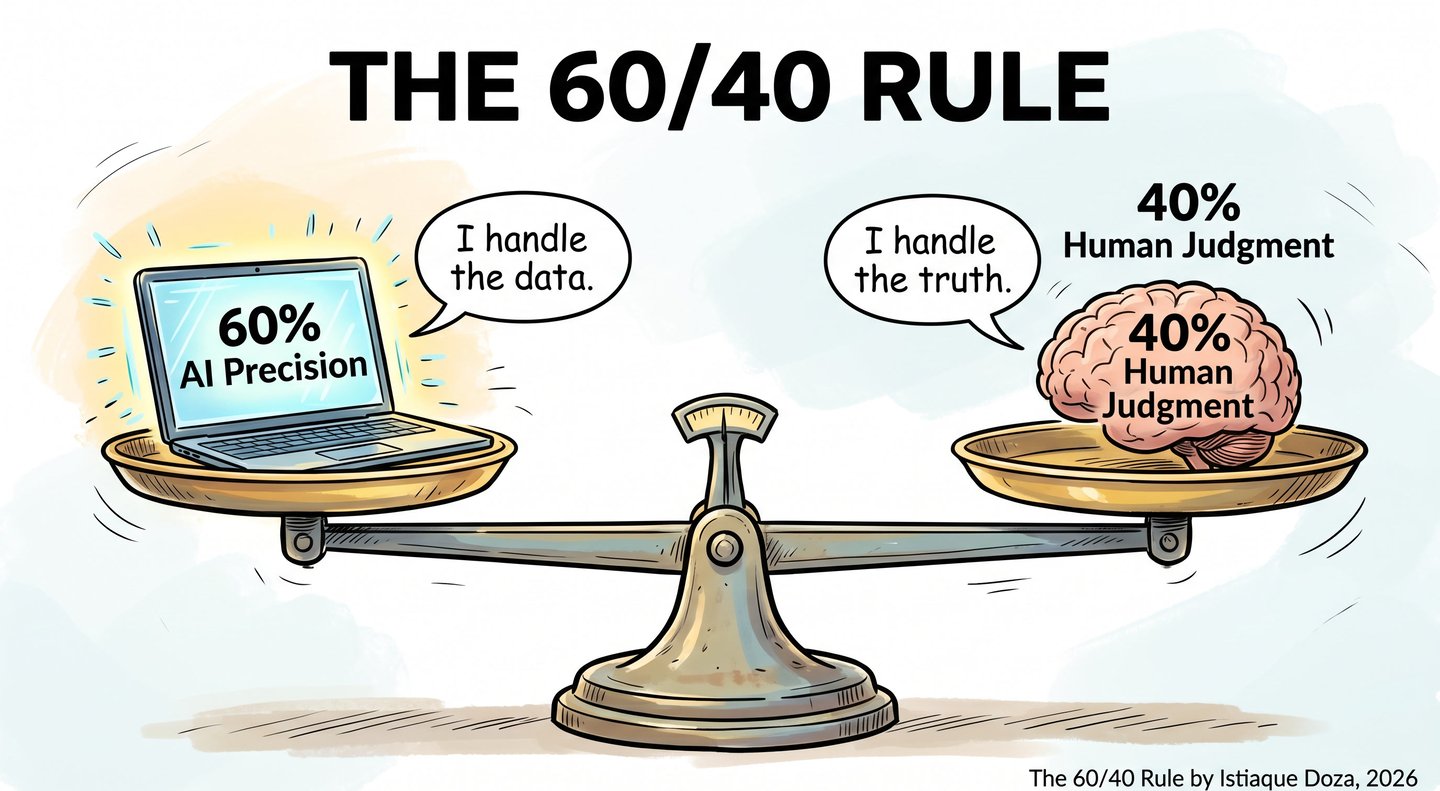
60% AI precision. 40% human judgment.
AI handles research, drafting, structuring, and optimization. Humans handle tone, ethics, accuracy, and the final decision.
This is not a compromise. It is a system. It produces marketing that is efficient and trustworthy.
Brands doing this well, like Gibson, are building trust. Their head of marketing said AI helps staff think more strategically and creatively. Brands that hand everything to AI and remove the human face backlash.
One More Thing About 2026
A February 2026 report from UserTesting made a point that I think every marketer needs to hear:
“Trust is no longer a soft brand attribute. It is a constraint.”
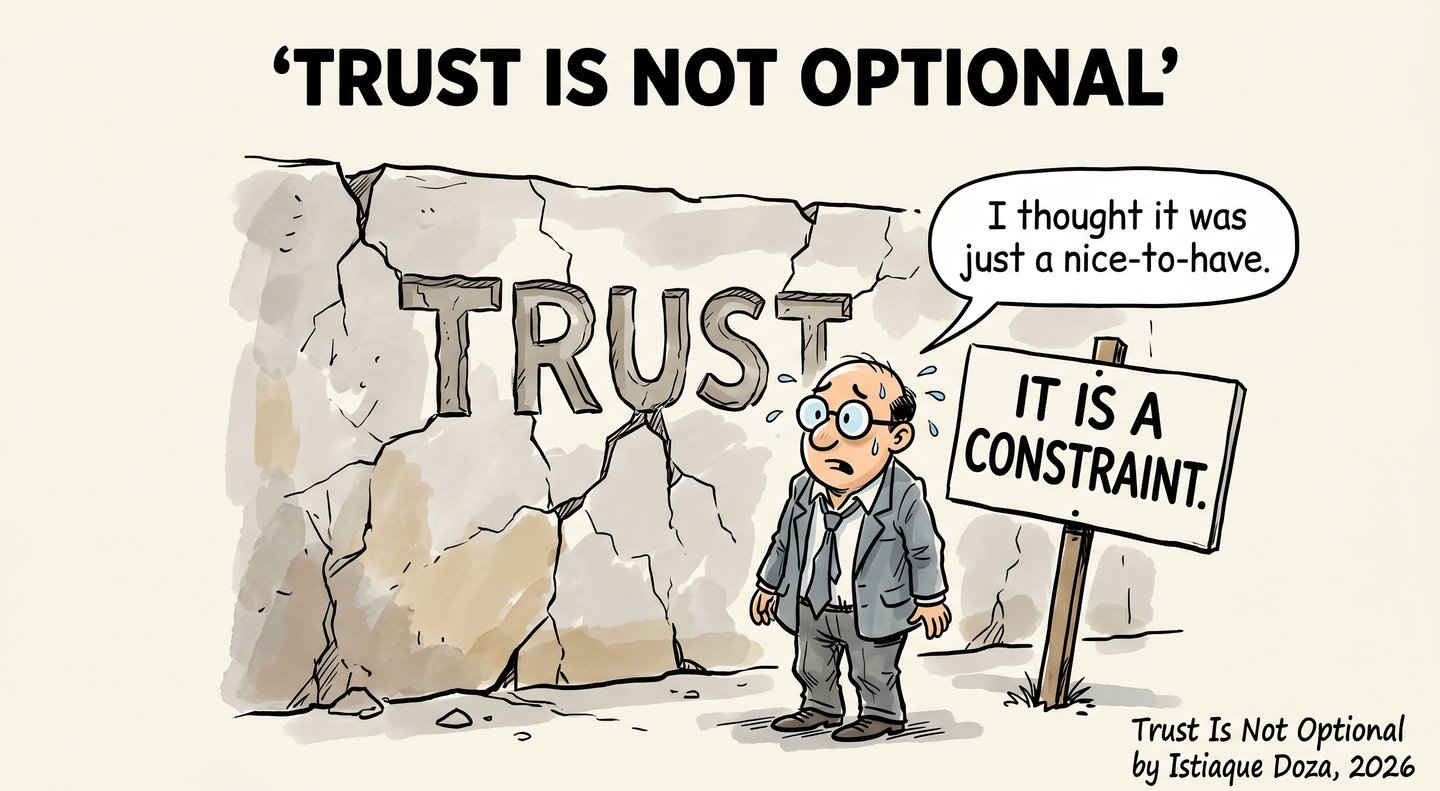
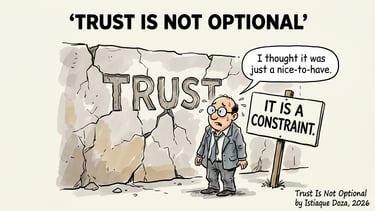
That means trust is not a nice-to-have. It is a prerequisite. Without it, even the most personalized, optimized, AI-powered experience will not convert.
You do not get credit for good intentions. You get credit for what your audience can verify.
So How Do You Know If Your AI Marketing Is Trustworthy?
You audit it.
Not by feeling. Not by asking your team if it seems fine. You check it against a structured set of criteria - claims, consistency, disclosure, consent, and proof.
I built a free checklist that does exactly that.
The 9-Point Trust Risk Checklist walks you through the same criteria I use with clients. Download it, run through your own marketing, and you will know within 30 minutes where your trust gaps are.
It is free. No credit card. No commitment.