
Why I’m Still Using Suno Ai Music - and Why I’m Not Switching to Google’s AI Music Tool
I compared Suno and Google’s Lyria 3 before deciding. Here’s why I stayed with Suno AI Music - distribution rights, SynthID, and the full creator pipeline for ASH & CONCRETE.
TOOLS I USE


My post content
I Make Music With AI. Here’s What That Actually Looks Like.
I’m not a musician by training.
I’m a marketing consultant. I write about ethics, brand trust, and AI strategy. My day job is helping executives and founders build credibility without cutting corners.
But I also make music.
My project is called ASH & CONCRETE. It lives at the intersection of Conscious Boom-Bap and Cinematic Noir. Heavy on atmosphere. Built with intention. And yes - built with the help of AI.
The tool I use is Suno.


Why I Started Using Suno
I needed a creative outlet that matched my workflow.
I think in concepts. I write in rhythm. Suno lets me turn a feeling - a texture, a mood, a message - into a full track in minutes. Not a loop. Not a sample. A complete song with vocals, structure, and sonic identity.
Suno supports over 1,200 musical genres and generates tracks up to 8 minutes long, with studio-grade audio quality. For someone who operates across Conscious Hip-Hop and dark atmospheric sounds, that range matters.
I’ve been using it to build the ASH & CONCRETE catalog. Every track starts with a prompt that reflects an idea - something I care about. The AI handles the production. I handle the direction.
That’s the workflow. And it works.
Then Google Released Lyria 3. And I Had to Make a Decision.
When Google launched its Lyria 3 model through the Gemini app, people started asking me: are you switching?
I did the comparison properly. I looked at audio quality, prompt control, distribution rights, and the purpose each tool was built for.
My verdict: I’m staying with Suno. Here’s exactly why.




The Three Reasons I Didn’t Switch
1. Distribution Rights Are Clear With Suno
This is the most important factor for any creator who plans to release music.
Songs made on Suno while subscribed to a Pro or Premier plan are granted commercial use rights. This allows you to distribute tracks to Spotify, Apple Music, and other platforms using the distributor of your choice.
That clarity matters. Lyria 3’s commercial and distribution rights for outputs from the Gemini app are not explicitly confirmed. For a project I’m building for release - ambiguity is a dealbreaker.
2. SynthID Is a Liability I Don’t Need
Every track generated in the Gemini app is embedded with SynthID - Google’s imperceptible AI watermark. It’s invisible to the ear but present in the file.
I already disclose that I use AI in my music. That’s my choice and my standard.
But an invisible, platform-owned watermark baked into my audio file is a different matter. It raises questions about ownership and distribution integrity that I’m not willing to leave unanswered.
3. Google Told Us Exactly What Lyria 3 Is For
Google’s own framing of Lyria 3 is that it gives people “a fun, unique way to express themselves.” That’s their words.
That framing is honest. And it tells me everything about the intended use case.
ASH & CONCRETE is not a fun experiment. It’s a project with sonic palettes, thematic intent, and a distribution pipeline. I need a tool built for that level of commitment - not a novelty feature inside a chat app.
The Other Half of the Pipeline
Suno gets you the music. But music sitting on your hard drive isn’t a release.
Once I have a track I’m happy with, it goes straight into DistroKid. That’s how ASH & CONCRETE lands on Spotify, Apple Music, and every other platform. No studio. No label. No middleman.
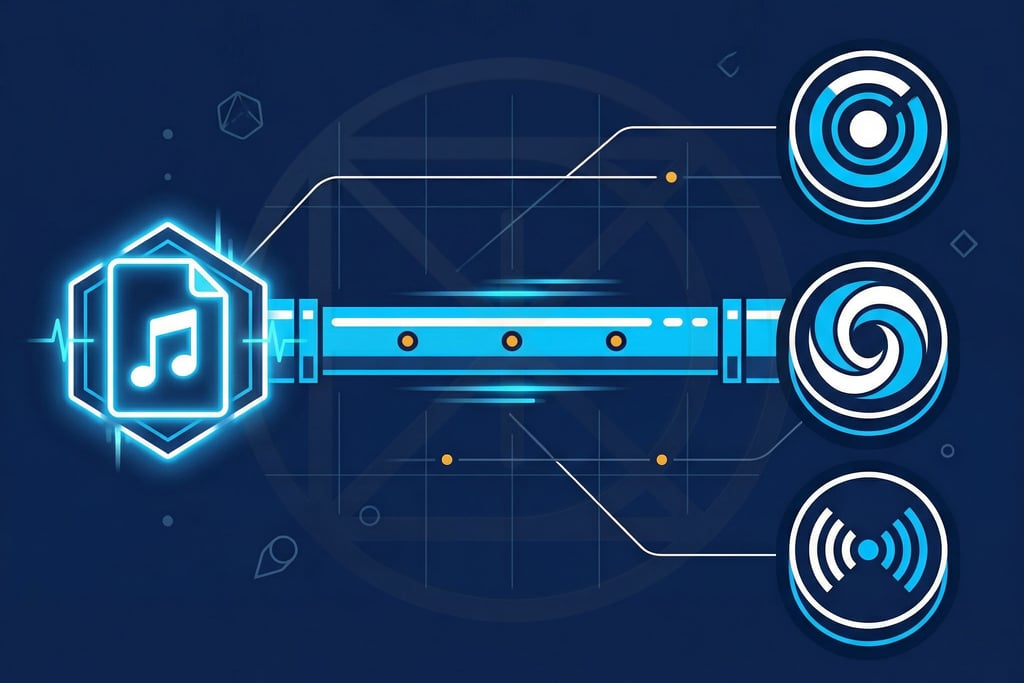
The combination is the whole workflow:
Suno produces the track
DistroKid distributes it to the world
Both tools are built for independent creators who are serious about releasing - not just experimenting. If you’re building a catalog and you need it on streaming platforms, DistroKid is the cleanest path I’ve found.
Get started here: https://distrokid.com/vip/seven/11084759
What Suno Has Been Building
While this comparison was playing out, Suno kept shipping.
In March 2026, Suno released version 5.5, introducing a voice capture feature called Voices, which lets users record or upload their own audio and incorporate that vocal identity into AI-generated tracks. The feature is limited to Pro and Premier subscribers and includes a verification layer for voice authentication.
Version 5.5 also introduced custom models, allowing users to upload their own tracks so the AI can learn their musical style, and a personalization feature called My Taste, which learns a creator’s preferred genres and moods over time to improve future outputs.
This is a platform being built for serious creators - not just casual users.
Suno has now reached 2 million paid subscribers and $300 million in annual recurring revenue, with over 100 million people having used the platform. That’s not a novelty tool. That’s infrastructure.
What This Means If You’re a Creator, Musician, or Marketer
Suno isn’t just for musicians.
If you create content for social media, branded campaigns, or client presentations - original background music matters. Stock music sounds like stock music. AI-generated music, done right, can match your brand’s tone exactly.
Marketing professionals can use Suno to produce:
Branded audio for video content
Podcast intro and outro tracks
Social media reels with custom music
Demo tracks for client pitches
The free plan lets you explore. The Pro plan unlocks commercial rights and full creative control.
Start here: https://suno.com/invite/@istiaquedoza
Then get your music onto streaming platforms with DistroKid: https://distrokid.com/vip/seven/11084759
My Honest Take on Google’s Tool
I’m not dismissing Lyria 3 permanently.
The audio quality is genuinely impressive - 48kHz stereo output. The ProducerAI platform offers granular controls that could eventually rival Suno. And if Google clarifies distribution rights, the equation changes.
My plan: revisit in 6 months.
But right now, in April 2026, for a creator who is actively building and releasing music - Suno is the right tool.
A Note on Transparency
I use AI tools openly. I talk about it publicly. I believe disclosure is part of integrity - not a liability.
ASH & CONCRETE is AI-assisted music. The direction, the concepts, the decisions - those are mine. The production is a collaboration between my creative intent and the technology.
That’s the honest version of what this looks like.







Affiliate Disclosure
This article contains affiliate links. The Suno link and the DistroKid link are affiliate links. If you sign up through either, I may receive a commission at no additional cost to you. I only recommend tools I personally use and have evaluated against real alternatives. This article reflects my genuine assessment.
Final Thought
I compared the tools. I made a decision based on rights, purpose, and what I’m actually building.
Suno won.
Not because it’s perfect. But because it’s built for creators who are serious about releasing - not just experimenting.
If you’re building something real, use tools that take it seriously too.
Make the music: https://suno.com/invite/@istiaquedoza
Release it to the world: https://distrokid.com/vip/seven/11084759